Cooking with what's already in your fridge
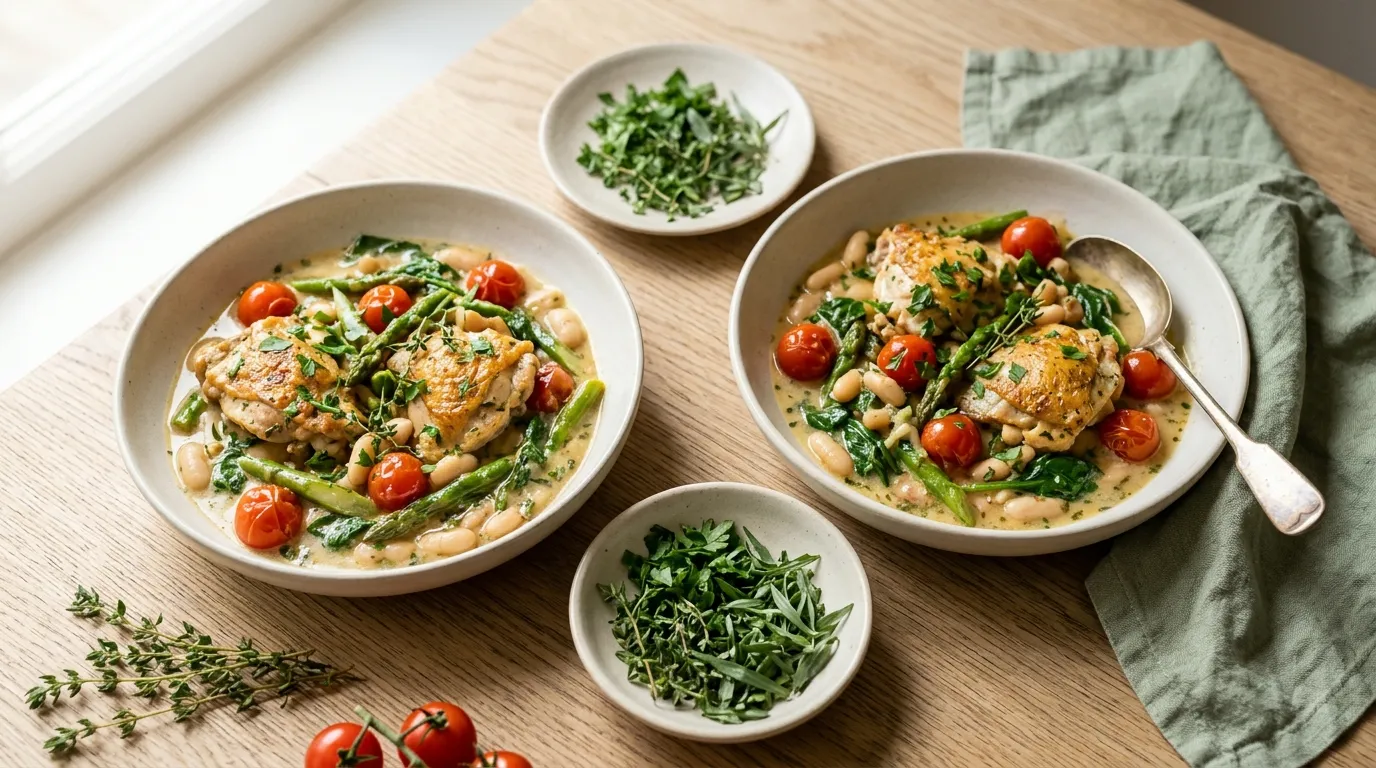
Most evenings don't start with a recipe. They start with an open fridge door, a vague feeling of hunger and a shelf of things that don't obviously go together: half a squash, a few eggs, the end of a block of cheese, some spinach that needs using today.
Cooking from what you have is a skill, and like any skill it gets easier with a few simple habits. Here's how we think about it.
Start with what needs using first
Before you think about what you want, look at what won't last. Soft herbs, salad leaves, cooked rice, opened cream, ripe tomatoes and cut vegetables are usually the first to go. Build the meal around one or two of those, and let everything else play a supporting role.
This one change does two things at once: less food ends up in the bin, and the decision about what to cook gets smaller. You're no longer choosing from every dish in the world, you're choosing what to do with spinach.
Think in shapes, not recipes
A handful of meal "shapes" can absorb almost anything:
- Something in a pan with an egg. Frittata, shakshuka, fried rice, a tortilla. Eggs hold odds and ends together.
- Something blended. Soup is the most forgiving dish there is. Onion, a vegetable or two, stock, and a little time.
- Something on a tray. Roast whatever you have at a high heat with oil and salt, then add a grain, a sauce or a fried egg.
- Something with pasta or rice. A simple sauce built from what's around: tomatoes, greens, a bit of cheese, a squeeze of lemon.
- Something wrapped. Flatbreads, tortillas or toast with a warm filling and something fresh on top.
When you look at the fridge with these shapes in mind, the question changes from "what recipe can I make?" to "which of these five does tonight's food want to be?"
Keep a few things that make leftovers taste intentional
You don't need a huge pantry. A small set of reliable extras turns odd ingredients into a meal that feels planned:
- Something sharp: lemons, vinegar, capers, pickles.
- Something rich: good olive oil, butter, a hard cheese, nuts.
- Something savoury: stock, soy sauce, tomato paste, miso.
- Something warm: chilli flakes, smoked paprika, cumin, curry paste.
- Something fresh: a pot of herbs on the windowsill goes a long way.
A plain bowl of rice and vegetables becomes dinner with a squeeze of lemon, a spoon of something savoury and a handful of herbs.
Be honest about time
A meal from leftovers is only helpful if it fits the evening you actually have. If you have twenty minutes, a tray bake that needs forty isn't the answer, however good it sounds. Decide how long you're willing to cook before you decide what to cook. It narrows the options in a helpful way.
Where Mixly fits
This is exactly the moment Mixly was built for. Instead of searching for a recipe that happens to use your three ingredients, you tell it what you have and what kind of evening it is:
I have half a squash, some feta, an onion and spinach that needs using. Something warm for two, about 30 minutes.
Mixly already knows what you cook with, because you told it once when you set up your kitchen: your oven, your hob, maybe a Thermomix or an air fryer. It also knows your units and any diets or dislikes you've noted. So the recipe it writes uses your ingredients, on your appliances, for the number of people at your table.
A few things that help get a good answer:
- Name what must be used. "The spinach needs using" is more useful than listing everything on the shelf.
- Say what you don't want. "Not soup tonight" saves a round of back and forth.
- Give a time. "Under 30 minutes" or "I have an hour" changes the recipe a lot.
- Ask for swaps. If the recipe needs something you don't have, say so. Mixly will suggest what to use instead.
Nothing is saved until you say so. If you like what you cooked, keep it in your recipe book so you can find it next time the same odds and ends turn up. If it was nearly right, ask for a change ("less chilli", "for four people") and you'll see exactly what changes before you apply it.
A note on food safety
Cooking from leftovers is thrifty, but it's worth staying careful. Use cooked rice and meat within a day or two, reheat them until piping hot, and when in doubt, leave it out. Mixly can suggest ideas, but you know what's been in your fridge and for how long. Always check temperatures, cooking times and allergens before you cook.
Try this tonight
Open the fridge and pick the one thing that most needs using. Choose a shape: egg, blended, tray, pasta or wrapped. Add something sharp and something fresh. That's dinner, and probably a better one than the recipe you would have searched for.